Great! Let’s begin.
The Amazing History of Artificial Intelligence: From Science Fiction to Everyday Life
How AI Began, How It Changed the World, and What the Next 10 Years May Hold
By Willie Diggins, SeniorCitizens.AI

Part 1
If someone had told me 30 years ago that one day I’d be sitting at my computer having conversations with Artificial Intelligence, I probably would have laughed.
Back then, AI sounded like something straight out of a science fiction movie. Most of us pictured robots walking around, talking like people, or giant computers taking over the world.
Fast forward to today, and AI has become part of our everyday lives.
Whether you realize it or not, you probably use AI several times a day. When you ask your phone for directions, watch a movie recommendation on Netflix, talk to Alexa, or ask ChatGPT a question, you’re using Artificial Intelligence.
As a senior citizen, I’ll admit I was a little skeptical when I first heard about AI. I wondered if it was too complicated for me or if it was something only young people and computer experts could understand.
I couldn’t have been more wrong.
Today, AI helps me write articles, organize ideas, create images, learn new things, and even build websites. That’s one of the reasons I created SeniorCitizens.AI—to show other older adults that AI isn’t something to fear. It’s simply another tool that can make life easier.
But where did AI actually come from?
Let’s take a trip back in time.
Long Before Computers
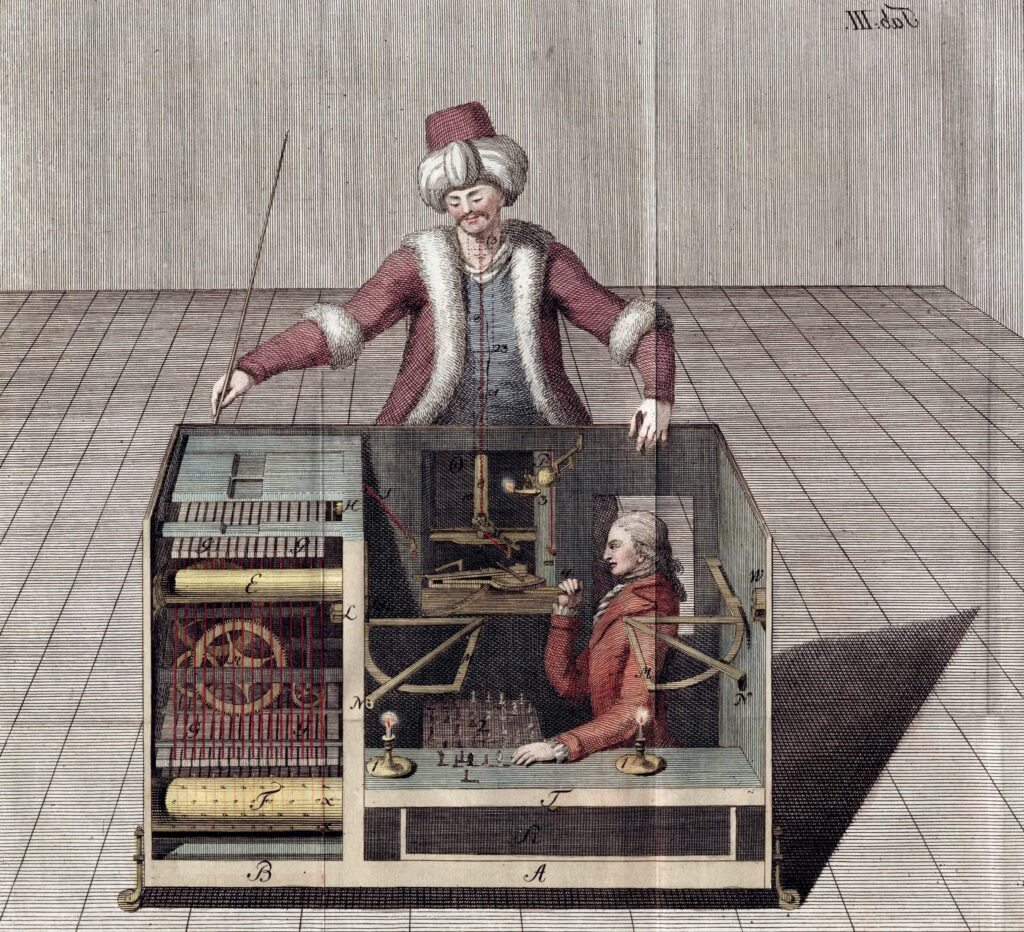
Believe it or not, the idea of intelligent machines is much older than computers.
Thousands of years ago, people imagined machines that could think, talk, and even move on their own. Ancient Greek stories described mechanical servants built by the gods, while inventors throughout history dreamed of creating machines that could imitate human intelligence.
Of course, those were only stories.
The technology simply didn’t exist yet.
Still, those early dreams planted the seeds for what would eventually become Artificial Intelligence.
The Man Who Changed Everything
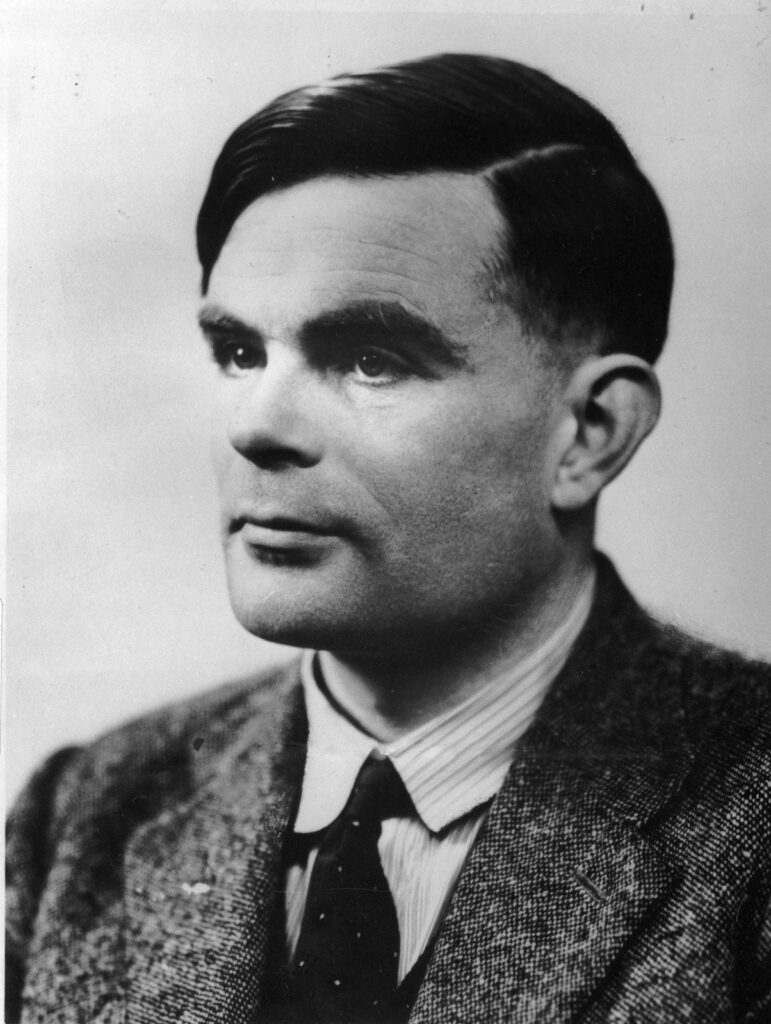
In the 1940s and early 1950s, a brilliant British mathematician named Alan Turing began asking an unusual question:
“Can machines think?”
At the time, computers were enormous. They filled entire rooms and had less computing power than the smartphone many of us carry today.
Most people believed computers could only perform calculations.
Turing believed they could eventually do much more.
In 1950, he wrote a groundbreaking paper describing what later became known as the Turing Test—an experiment designed to see whether a machine could communicate well enough that a person couldn’t easily tell whether they were talking to another human or a computer.
That simple question changed history.
Many people now consider Alan Turing the father of modern computer science and one of the pioneers of Artificial Intelligence.
When AI Got Its Name
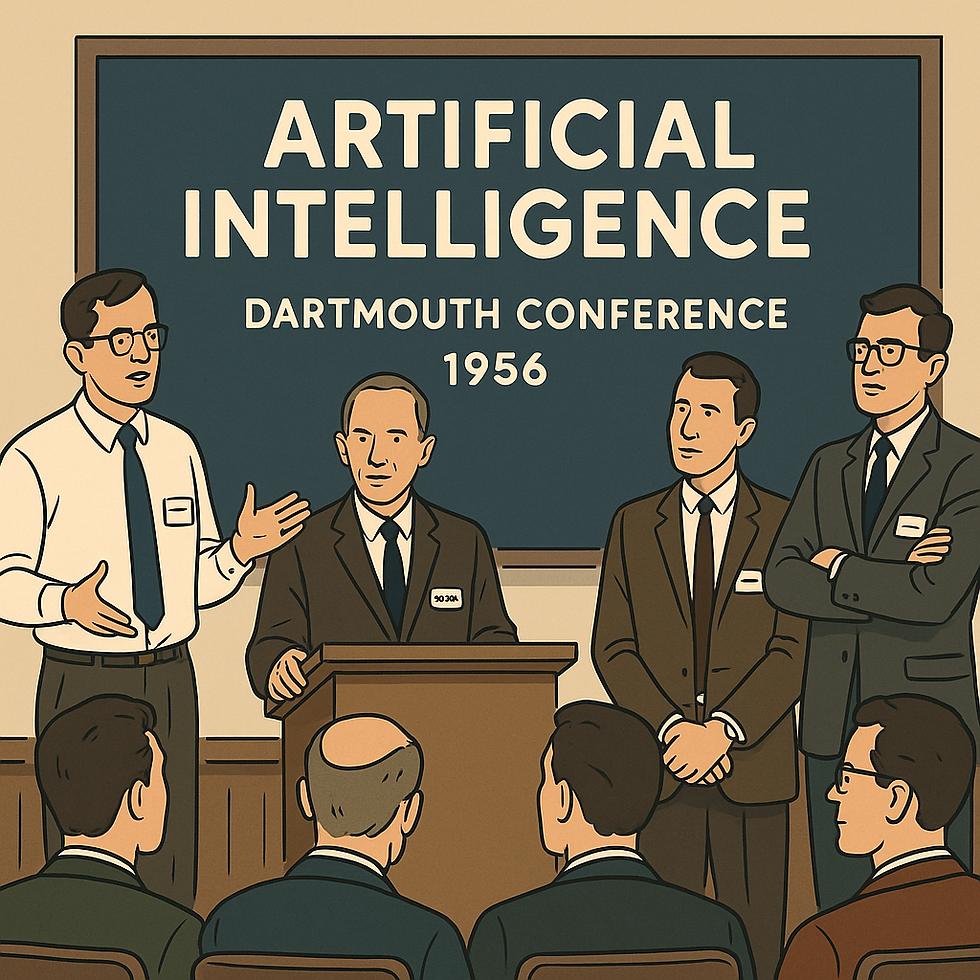
Artificial Intelligence officially became its own field of study during the summer of 1956.
A small group of scientists gathered for a research workshop at Dartmouth College in New Hampshire.
One of the organizers, John McCarthy, coined the term Artificial Intelligence.
The researchers believed that if they studied intelligence carefully enough, they could teach computers to solve problems, understand language, and even learn from experience.
They thought it might take just a few months.
As it turned out, it would take decades.
Even so, that summer meeting is considered the official birth of Artificial Intelligence.

The First AI Programs
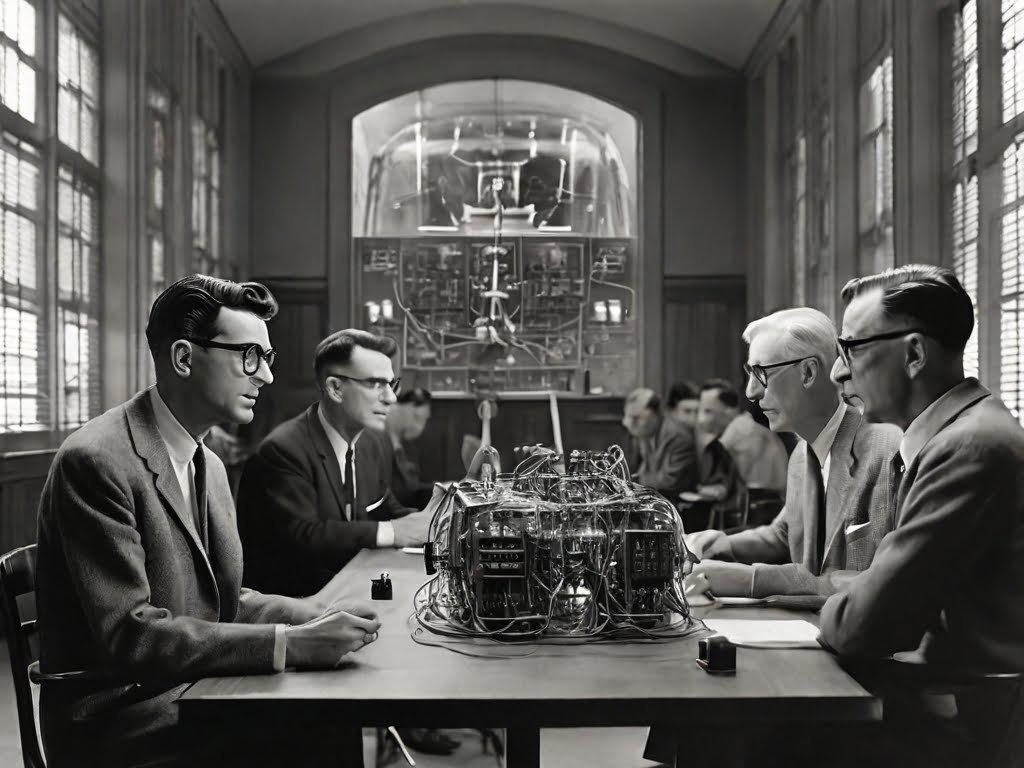
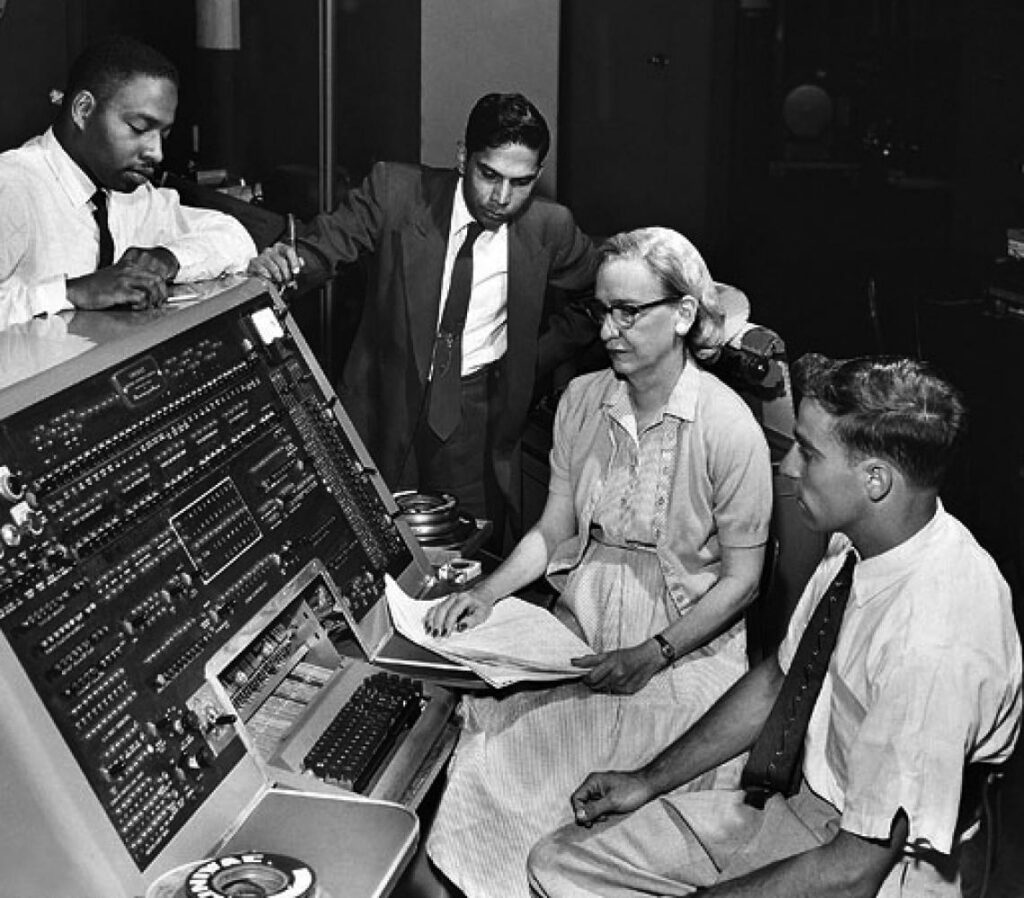
During the 1950s and 1960s, computers slowly began doing things that once seemed impossible.
Researchers created programs that could:
- Solve math problems
- Play simple games
- Recognize patterns
- Answer basic questions
- Prove mathematical theorems
By today’s standards, these programs were very simple.
But at the time, they amazed people.
Imagine seeing a machine solve a puzzle all by itself for the very first time.
It was like watching the future arrive.
Unfortunately, there was one big problem.
Computers weren’t very powerful.
They were slow.
Memory was limited.
Storage was tiny.
Researchers had wonderful ideas, but the technology simply hadn’t caught up yet.
The First AI Winter
As excitement grew, expectations became unrealistic.
Many people believed intelligent computers were only a few years away.
When those promises didn’t come true, funding dried up.
Research slowed.
People lost interest.
Scientists later called this period the AI Winter because progress seemed to freeze.
Interestingly, AI would experience another “winter” years later for the same reason.
People expected too much, too quickly.
Looking back, it’s easy to see that AI wasn’t failing.
It was simply waiting for faster computers, better software, and much larger amounts of data.
Sometimes, great ideas arrive before the world is ready for them.

The Computer Revolution Changed Everything
During the 1980s and 1990s, something remarkable happened.
Home computers became more common.
Businesses began using computers every day.
The internet connected people around the world.
Computer processors became dramatically faster.
Storage became cheaper.
Suddenly, researchers had the tools they needed to build smarter software.
Artificial Intelligence slowly began waking up again.
At first, most people didn’t notice.
But behind the scenes, scientists were making incredible progress that would eventually change the world.
➡️ In Part 2, we’ll explore how AI went from research laboratories to our homes, how programs like ChatGPT changed everything, how I discovered AI myself, and what I believe AI will look like ten years from now.
The Amazing History of Artificial Intelligence: From Science Fiction to Everyday Life
Part 2 – From Supercomputers to AI in Your Pocket

There was a time when most people thought Artificial Intelligence would always remain inside research laboratories and universities.
Fortunately, that didn’t happen.
Instead, AI quietly began finding its way into our everyday lives.
Most people didn’t even realize it.
When AI Beat a World Chess Champion
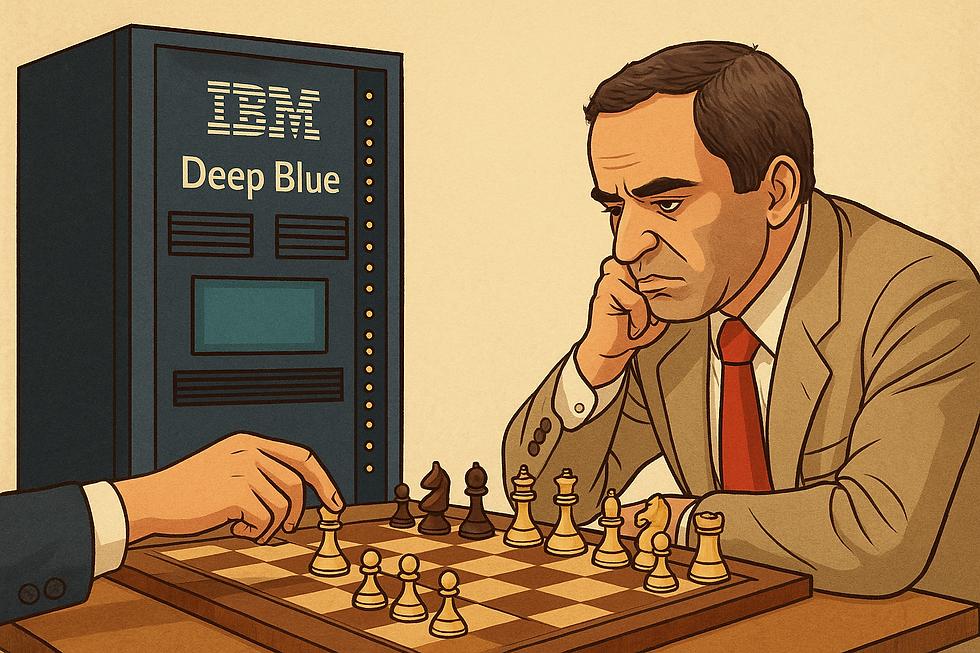
One of the biggest turning points came in 1997.
A powerful IBM computer called Deep Blue defeated world chess champion Garry Kasparov in a historic match.
This wasn’t just about chess.
For many people, it was proof that computers could solve incredibly complex problems.
The world paid attention.
Even though Deep Blue couldn’t hold a conversation or answer questions like today’s AI, it showed what computers were becoming capable of.

AI Quietly Entered Our Daily Lives
During the 2000s, AI became part of everyday technology.
You may not have noticed it at first.
Spam filters began keeping unwanted emails out of your inbox.
GPS systems started finding faster routes.
Online stores suggested products you might like.
Banks used AI to detect suspicious transactions.
Streaming services recommended movies and television shows based on what you enjoyed watching.
Little by little, AI became part of our daily routine.
Then smartphones arrived.
Suddenly, millions of people were carrying incredibly powerful computers in their pockets.
Voice assistants such as Siri and Google Assistant made AI even more accessible.
Instead of typing questions, you could simply ask them out loud.
For many seniors, this was the first real experience with Artificial Intelligence.

Then Everything Changed
In late 2022, something happened that changed AI forever.
A new generation of conversational AI became available to the public.
Instead of giving short answers like a search engine, AI could now carry on conversations.
People could ask questions naturally.
Write stories.
Plan vacations.
Create recipes.
Translate languages.
Write letters.
Even generate computer code.
Millions of people around the world tried it.
Many were amazed.
Some were skeptical.
Others were nervous.
I was curious.
My Own Journey with AI
As many of you know, I didn’t grow up with computers like today’s younger generation.
Like many seniors, I’ve watched technology change over the decades.
I’ve seen black-and-white television become high-definition streaming.
I’ve seen rotary telephones become smartphones.
I’ve watched typewriters disappear and computers become common in nearly every home.
Artificial Intelligence was simply the next step.
When I first started experimenting with AI, I wasn’t trying to become an expert.
I simply wanted to see if it could actually help me.
The more I used it, the more I realized something important.
AI wasn’t replacing my thinking.
It was helping me think more creatively.
It wasn’t doing the work for me.
It was helping me organize ideas, answer questions, and save time.
Before long, I was using AI almost every day.
Today, I use it to help write articles, create website content, brainstorm ideas, create images, write music, and even build websites.
That’s one of the reasons I created SeniorCitizens.AI.
I wanted other older adults to know they could learn AI, too.
If I can learn it, you can too.
AI Isn’t Here to Replace Seniors
One concern I hear from older adults is:
“Will AI replace people?”
The truth is, AI is already changing many jobs.
But it’s also creating new opportunities.
Think about calculators.
When calculators became common, people didn’t stop learning math.
They simply stopped doing long division by hand every day.
The calculator became a tool.
That’s exactly how I see AI.
It’s another tool.
You still need your experience.
Your judgment.
Your wisdom.
Your common sense.
In fact, those qualities become even more valuable in an AI-powered world.
After all, AI may know facts.
But it doesn’t have your life experience.
It hasn’t raised a family.
Served in the military.
Built a business.
Worked for forty years.
Or learned life’s lessons the way you have.
AI can process information.
You provide wisdom.
That’s a powerful combination.
What Will AI Look Like in 10 Years?
No one knows exactly what the future holds.
But based on what we’re seeing today, I believe AI will become even more helpful—and much more personal.
Imagine waking up in the morning and asking your AI assistant:
“What’s on my schedule today?”
It reminds you about your doctor’s appointment.
It tells you the weather.
It lets you know about traffic.
It reminds you to take your medication.
It even suggests a healthy breakfast based on your doctor’s recommendations.
That future isn’t as far away as many people think.
Here are a few things I believe we’ll see by 2036:
Smarter Healthcare
AI will likely help doctors detect diseases earlier and assist patients in managing chronic conditions. It may also make it easier to understand medical information and organize personal health records.
More Independent Living
Smart homes could help older adults remain independent longer by reminding them about medications, detecting falls, monitoring home safety, and simplifying everyday tasks.
Personalized Learning
AI tutors may help people learn almost anything—from a new language to using the latest technology—at their own pace.
Easier Travel
Planning a vacation could become as simple as saying:
“I’d like a four-day trip to the mountains with easy walking and a reasonable budget.”
AI could create a complete itinerary in seconds.
Better Communication
Real-time translation may make conversations between people who speak different languages almost effortless.
Imagine traveling anywhere in the world without worrying about the language barrier.
A Word of Caution
While I’m excited about AI, I also believe we should use it wisely.
Always protect your personal information.
Be cautious of scams.
Verify important medical or financial advice with qualified professionals.
Remember…
AI is an assistant.
It should never replace your doctor, attorney, accountant, or financial advisor.
The smartest people will be those who learn how to work with AI—not depend on it completely.
My Final Thoughts
Sometimes people ask me:
“Willie, aren’t you afraid of AI?”
My answer is simple.
No.
I’m excited about it.
Not because I think AI is perfect.
But because I believe it gives older adults something we’ve always valued…
The opportunity to keep learning.
One of the biggest myths about aging is that learning stops after retirement.
I don’t believe that for a second.
Every day is another opportunity to learn something new.
Artificial Intelligence is simply another chapter in that lifelong journey.
If you’re reading this today and you’ve never tried AI, I encourage you to give it a chance.
Ask it a simple question.
Have a conversation.
Experiment.
You may be surprised by how helpful it can be.
That’s exactly how my journey began.
And it’s one of the best decisions I’ve made.
Continue Your AI Journey
At SeniorCitizens.AI, my mission is to make Artificial Intelligence easy, practical, and enjoyable for older adults.
If you’re just getting started, don’t worry.
You don’t need to know everything.
You simply need to be curious.
Start with one question.
Then another.
Before long, you’ll discover what I did:
AI isn’t about replacing people.
It’s about helping people.
And that’s something worth getting excited about.
Sources
This article is based on historical information from recognized milestones in artificial intelligence, including the work of Alan Turing, the 1956 Dartmouth Summer Research Project on Artificial Intelligence, IBM’s Deep Blue chess milestone, and publicly documented developments in consumer AI. Predictions about the next 10 years are informed opinions based on current trends and should be viewed as forecasts rather than guarantees.